Just Won: $1M,XXX,XXX Trucking Accident Case
 The Million Dollar Advocates Forum: The Top Trial Lawyers In America

What Happened
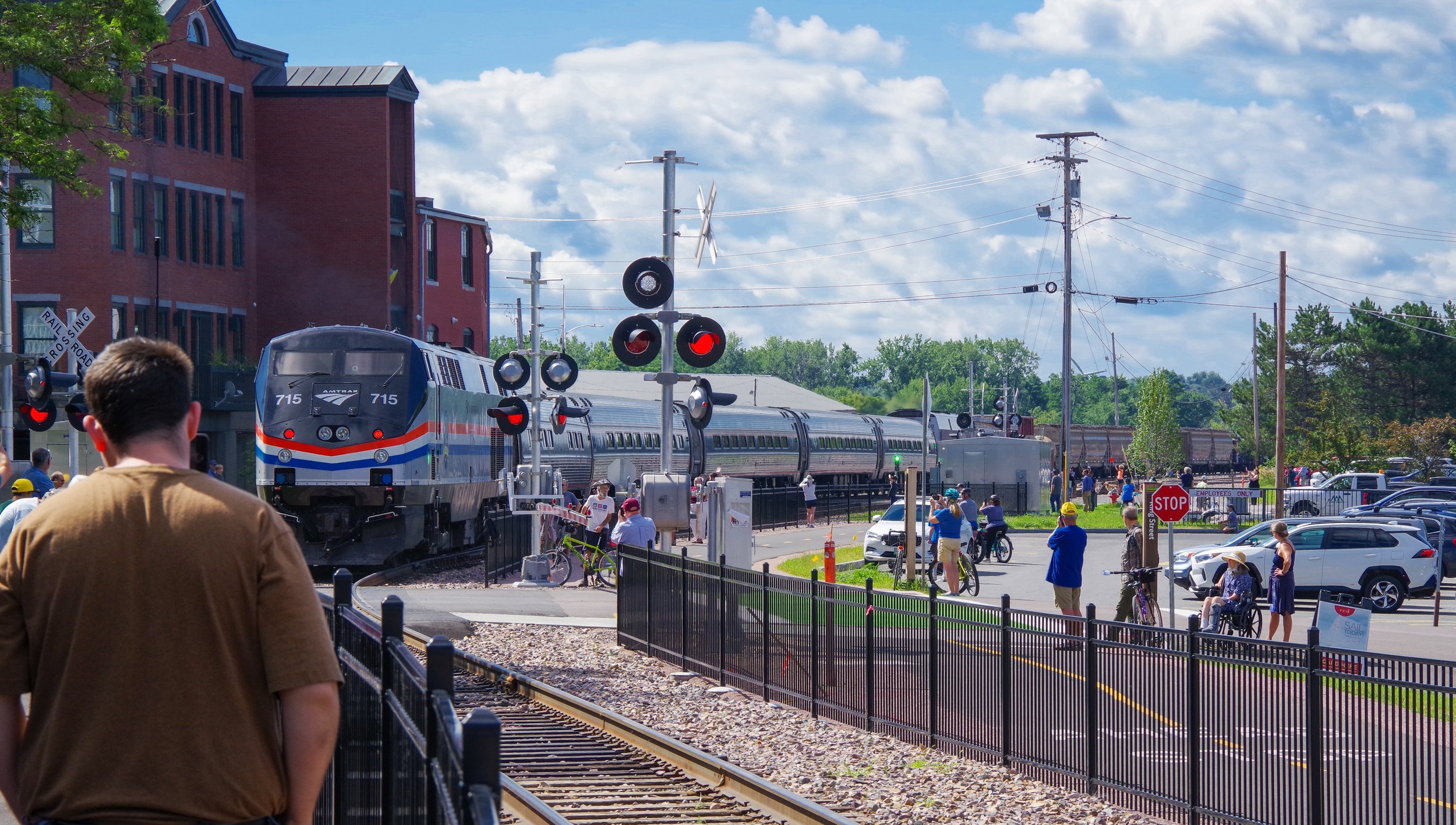
The restored Amtrak Mardi Gras passenger service, which runs along the Gulf Coast through Louisiana, Mississippi, and Alabama, has reportedly been tied to its fourth fatal crash since the line returned to service in August of the prior year. According to local reporting out of the Mobile, Alabama area, the most recent incident happened in the early evening near Irvington, Alabama, where a woman believed to be experiencing homelessness was allegedly struck while sitting on the tracks. Across the four reported fatal incidents, news outlets have placed the total death toll at six.
Earlier crashes along the same corridor have included a collision near Theodore, Alabama, that reportedly killed a mother and her young daughter, and a separate incident near Grand Bay, Alabama, in which a commercial truck became stuck on the tracks at a highway crossing before being struck. Several additional non-fatal incidents have also been reported. Local officials along the route — including communities in Mississippi — have raised growing public-safety concerns about the line, even as ridership has reportedly exceeded 100,000 passengers.
For Mississippi drivers, truckers, and families who live near these tracks, the pattern raises a real question: when a vehicle and a passenger train collide, who is responsible, and what rights do injured people and surviving family members actually have?
Who May Be Liable
Train-versus-vehicle crashes rarely have a single, obvious defendant. Depending on the facts, several parties could be liable:
- The railroad operator or passenger rail carrier. If a train was allegedly speeding for conditions, failed to sound a horn, or did not brake appropriately, the carrier may bear responsibility.
- The track owner. On the Gulf Coast corridor, freight railroads typically own the tracks that passenger trains use. An owner that allegedly fails to maintain signals, gates, vegetation sightlines, or crossing surfaces could be liable.
- State or local government entities. Crossings that lack adequate warning devices — flashing lights, gates, or proper signage — may expose a road authority to claims, subject to strict notice rules and immunity limits under the Mississippi Tort Claims Act.
- A commercial trucking company. When a tractor-trailer becomes stuck or stalls on tracks, the motor carrier, driver, or loader may share fault for routing, training, or load-related decisions.
- Other motorists. A driver who runs around lowered gates or ignores warning devices may be liable to passengers, pedestrians, or other vehicles involved.
- Equipment manufacturers. If a crossing signal, train component, or vehicle safety system allegedly failed, a product manufacturer could be brought into the case.
No party should be assumed at fault before a full investigation. These are categories of defendants who may be liable depending on what the evidence shows.
Legal Theories That May Apply
A Mississippi attorney evaluating a rail-corridor crash will typically look at several overlapping theories:
- Negligence. The core theory in most vehicle and train cases — failure to use reasonable care behind the wheel, in dispatching a train, or in maintaining a crossing.
- Negligence per se. Violation of a federal rail regulation, Mississippi traffic statute, or local crossing ordinance can shortcut the duty-and-breach analysis.
- Premises liability / dangerous crossing claims. A poorly designed or maintained crossing may be treated as a dangerous condition for which the controlling entity could be liable.
- Federal Employers Liability Act (FELA). If a railroad worker was injured, FELA — not standard workers’ compensation — typically governs the claim.
- Wrongful death. Under Mississippi Code § 11-7-13, certain family members may bring a wrongful death action when a loved one is killed by another’s alleged negligence.
- Product liability. If a defective component allegedly contributed to the crash or to the severity of injuries, a product claim may apply.
- Commercial motor carrier liability. When a truck is involved, federal motor-carrier regulations and respondeat superior principles may extend liability to the trucking company itself.
Damages Victims May Recover
Mississippi law allows injured people and surviving family members to pursue a broad range of damages when another party’s alleged negligence causes harm:
- Medical expenses, both past and reasonably anticipated future care.
- Lost wages and lost earning capacity, especially significant in catastrophic injury or wrongful death cases.
- Pain, suffering, and mental anguish.
- Disfigurement and permanent impairment.
- Loss of consortium for a spouse, and loss of companionship and society in wrongful death claims.
- Funeral and burial expenses in fatal cases.
- Punitive damages, which Mississippi allows under § 11-1-65 in cases involving actual malice, gross negligence evidencing willful disregard, or fraud — subject to statutory caps.
Non-economic damages in non-medical-malpractice cases are capped in Mississippi at $1,000,000 under § 11-1-60, and claims against governmental entities face additional caps and procedural hurdles under the Mississippi Tort Claims Act. An experienced attorney can explain how these limits would apply to a specific case.
Evidence That Strengthens a Case
Rail-corridor cases live or die on evidence — much of which disappears quickly if no one moves to preserve it. Important categories include:
- Locomotive event recorders (the “black box”) showing speed, throttle, and brake application.
- Forward-facing locomotive camera footage.
- Crossing signal maintenance and inspection records.
- Dispatch and radio communications.
- Federal Railroad Administration accident reports and prior incident history for the same corridor or crossing.
- Commercial vehicle ECM data, dash cam, and driver logs if a truck was involved.
- Eyewitness statements from passengers, motorists, and nearby residents.
- Scene photographs, drone mapping, and accident reconstruction by qualified experts.
- Medical records and treating physician opinions documenting injuries and prognosis.
- Toxicology and post-incident testing of involved operators where appropriate.
Many of these records are controlled by the railroad and must be requested — sometimes through a court-ordered preservation letter — before they are overwritten or lost.
What to Do Next
If you or a family member was hurt in a train-versus-vehicle collision, or any serious crash along the Gulf Coast corridor that runs through Mississippi, a few conservative steps protect your rights:
- Get medical care and keep going to your appointments. Gaps in treatment are routinely used against injury victims.
- Preserve the vehicle and any electronics. Do not let an insurer or wrecker dispose of a damaged truck or car before it can be inspected.
- Write down what you remember while it is fresh — weather, signal status, train horn, gate position, time of day.
- Do not give a recorded statement to any insurer or railroad claims representative without speaking to a lawyer first. Adjusters often call within hours, and what you say can be used to reduce or deny your claim.
- Mind the deadlines. Mississippi’s general personal injury statute of limitations is three years under § 15-1-49, but claims against governmental entities under the Mississippi Tort Claims Act require written notice within 90 days and suit within one year. Federal rail claims can have their own timelines.
If you or a loved one has been seriously hurt — or worse — in a crash involving a train, a commercial truck, or any other vehicle along Mississippi’s Gulf Coast region, you do not have to sort this out alone. Call Van Every Law at (662) 502-5353 for a free Mississippi case evaluation — over 9 decades of trusted legal excellence. You can also reach the firm at https://vaneverylaw.com.
Frequently Asked Questions
Can I sue Amtrak or the railroad if a family member was killed at a crossing in Mississippi?
Possibly. If the train crew, dispatcher, or track owner allegedly failed to use reasonable care — for example, by speeding, not sounding a warning, or failing to maintain crossing signals — surviving family members may have a wrongful death claim under Mississippi Code § 11-7-13. These cases are fact-intensive and often involve both state law and federal rail regulations.
What if the driver of a car or truck was partly at fault for the crash?
Mississippi follows pure comparative fault, which means an injured person can still recover damages even if they were partly to blame, with the award reduced by their percentage of fault. So a truck driver who was partially responsible for getting stuck on the tracks may still have a claim against a railroad or signal maintainer who also allegedly contributed.
How long do I have to file a claim after a train-vehicle crash in Mississippi?
The general personal injury statute of limitations in Mississippi is three years under § 15-1-49. But if a government entity is potentially liable — for example, a city or county that maintains a crossing — written notice usually must be given within 90 days and suit filed within one year under the Mississippi Tort Claims Act. Federal claims can have different deadlines, so it is important to talk to an attorney early.
What kinds of damages are available in a Mississippi wrongful death case?
Families may be able to recover funeral and burial expenses, the deceased person’s medical bills, lost income and future earnings, and non-economic damages such as loss of companionship, society, and mental anguish. Punitive damages may also be available under § 11-1-65 when conduct is alleged to be grossly negligent or willful. The specific recovery depends on the family situation and the evidence.
The insurance company called me right after the crash. Should I talk to them?
It is almost always a mistake to give a recorded statement to an insurance adjuster or railroad claims representative before speaking with your own attorney. Their job is to limit what the company pays, and innocent-sounding questions are often designed to lock you into answers that hurt your case later. You can politely decline and refer them to counsel.
Does it matter if the person killed was a pedestrian on the tracks?
It can affect the analysis, but it does not automatically end a case. Railroads and track owners may still have duties regarding speed, warnings, sightlines, and known dangerous areas, and a thorough investigation may reveal alleged failures that contributed to the death. Each situation has to be evaluated on its own facts.
What if a commercial truck was hit by the train — who pays?
When a tractor-trailer is involved, the trucking company, the truck driver, the railroad, and even the company that loaded or routed the truck may all be potentially liable depending on what the evidence shows. Federal motor carrier regulations often play a major role. Injured drivers, passengers in other vehicles, and families of those killed should have the crash investigated promptly before evidence disappears.
How much does it cost to talk to Van Every Law about a case like this?
An initial case evaluation with Van Every Law is free, and personal injury cases are typically handled on a contingency fee — meaning no attorney’s fee unless there is a recovery. That allows families to get answers about their rights without taking on more financial pressure during an already difficult time.
Original reporting: 1079ishot.com.